Лаборатория молекулярных основ эмбриогенеза

Руководитель: Зарайский Андрей Георгиевич, д. б. н.
+7 (495) 336-36-22 · azaraisky@yahoo.com

Развитие мозга, регуляция экспрессии генов, трансгенные организмы, гомеобоксные гены, регуляторы TGF-beta сигнализация, малые ГТФазы, Zyxin

Лаборатория молекулярных основ эмбриогенеза была образована в 2005 г. на основе группы с аналогичным названием, выделившейся в 1995 г. из Лаборатории структуры и функции генов человека (зав. лабораторией - академик Е.Д. Свердлов). Главной областью исследований лаборатории является изучение молекулярно-генетических механизмов раннего развития центральной нервной системы позвоночных. В качестве основной рабочей модели используются эмбрионы шпорцевых лягушек Xenopus laevis и Xenopus tropicalis.

Основные достижения

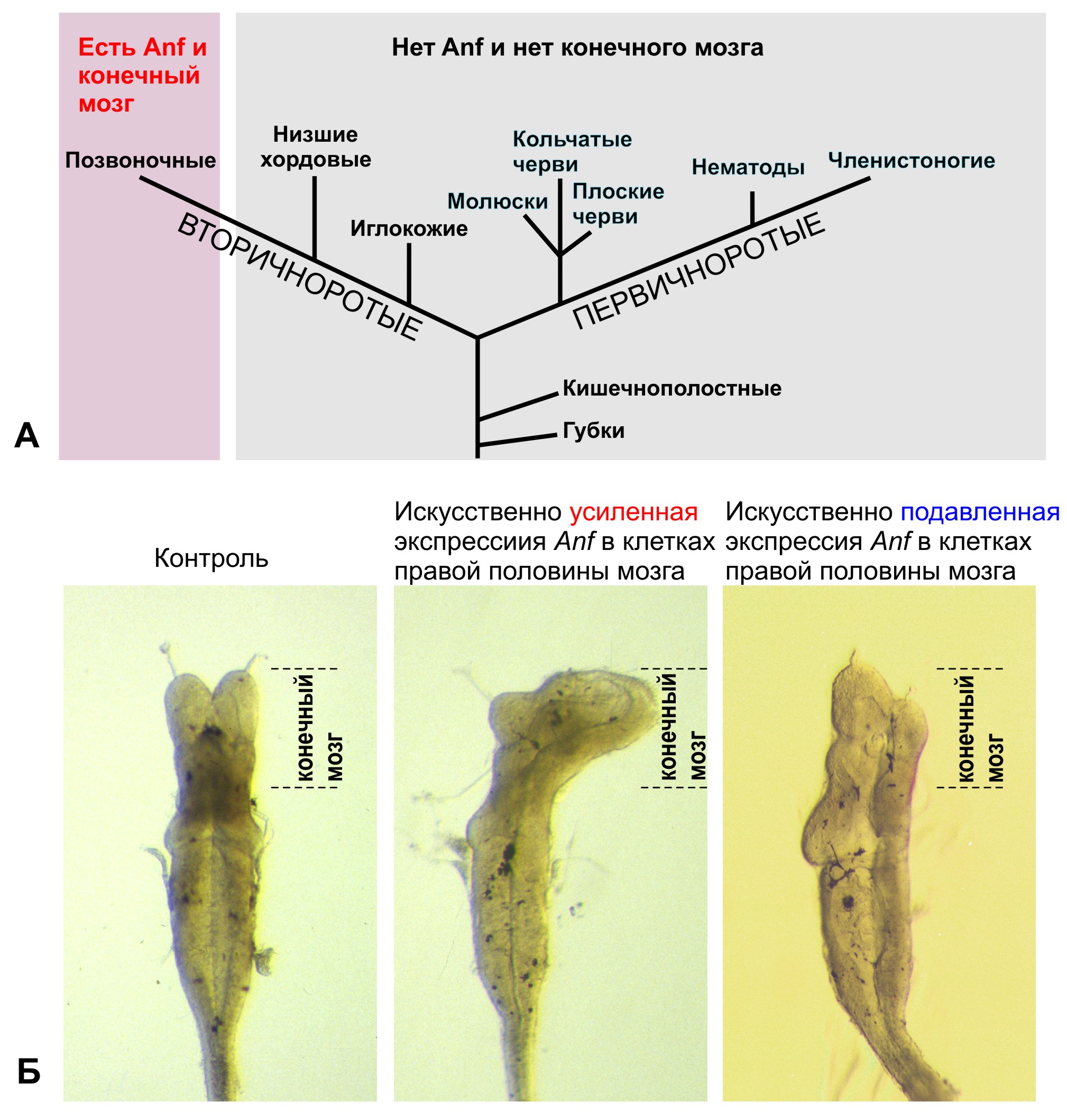
Гомеобоксные гены Anf в раннем развитии головного мозга (Рис. 1 А-Б’) (Ермакова Г. В, Ерошкин Ф. М., Мартынова Н. Ю., Зарайский А. Г.)

Нами был открыт и в настоящее время продолжает изучаться неизвестный ранее класс гомеобоксных генов, получивших название в соответствии с местом своей экспрессии в эмбриогенезе — Anf (от Anterior neural fold — передний валик зачатка центральной нервной системы). Ген Anf имеется только у позвоночных животных, включая человека, и является одним из ключевых регуляторов раннего развития переднего мозга — уникального отдела головного мозга позвоночных, из которого развиваются такие важные структуры, как большие полушария мозга и глаза. Нами было показано, что функция Anf, как в эволюции, так и в эмбриогенезе, заключается в «расчистке» той области нейрального зачатка, которая становится передним мозгом, от экспрессии генов, регулирующих развитие задних отделов мозга.

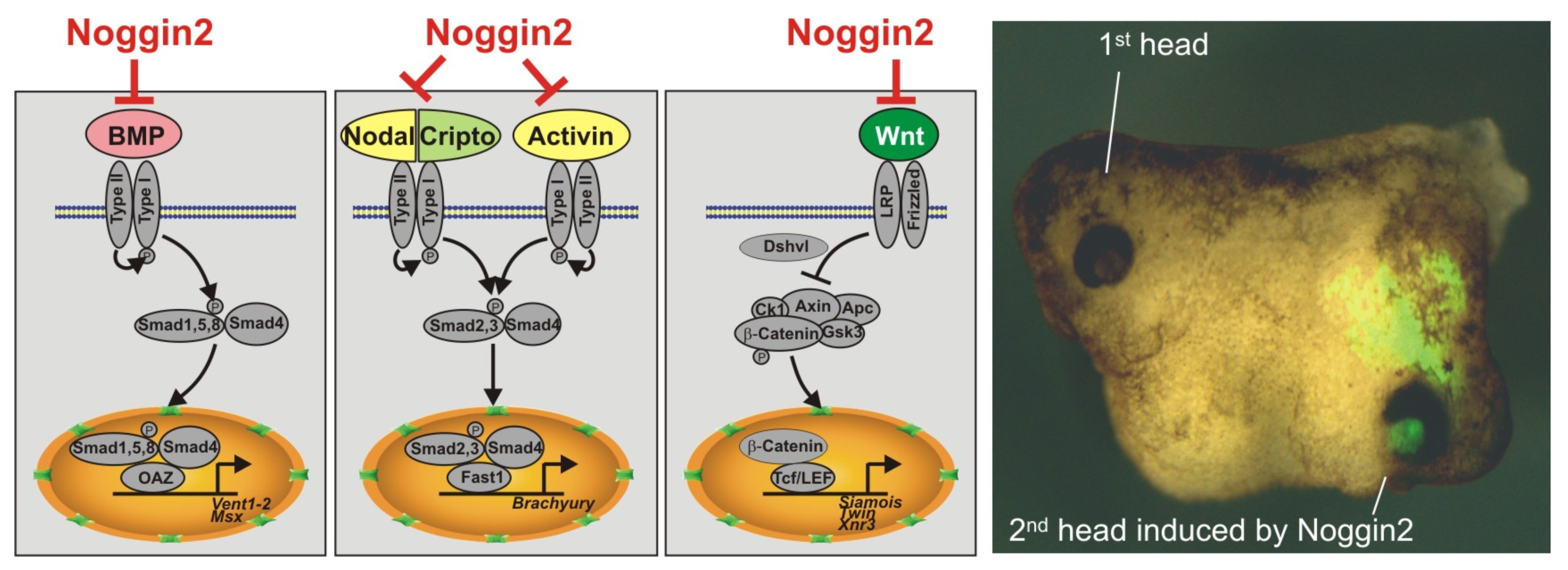
Секретируемые белки Noggin (Рис. 1 В) (Байрамов А. В, Ерошкин Ф. М., Мартынова Н. Ю., Ермакова Г. В., Зарайский А. Г.).

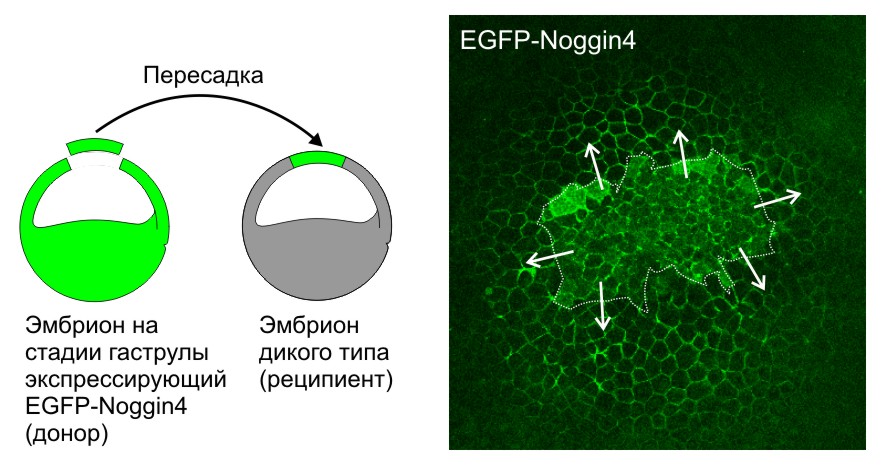
Два новых семейства секретируемых белков Noggin — Noggin2 и Noggin4 — были открыты в ходе поиска генов, регулируемых факторами Anf. Белки Noggin способны связывать и, тем самым, ингибировать ряд ростовых факторов из суперсемейства TGF-β. Поскольку помимо управления ранним развитием мозга, факторы TGF-β вовлечены в регуляцию многих клеточных процессов, в том числе, сопровождающих такие патологии, как артрит, астма и канцерогенез, — дальнейшее исследование новых белков Noggin как эффективных регуляторов активности этих факторов может быть важно для биомедицинских приложений.

Малые ГТФазы Ras-dva (Рис. 1 Г) (Терешина М. Б., Зарайский А. Г.).

В ходе изучения генной сети, связанной с функционированием генов Anf, нами было идентифицировано новое, 8-е, семейство малых ГТФаз, получивших название Ras-dva. Данные ГТФазы специфично экспрессируются в зачатке головного мозга и регулируют его раннее развитие. В настоящее время в лаборатории проводится исследование роли ГТФаз Ras-dva и их молекулярных партнеров в раннем развитии зачатка мозга.

Белки-партнеры регулятора актинового цитоскелета — белка Zyxin (Мартынова Н. Ю., Ермолина Л. В., Зарайский А. Г.).

Белок Zyxin был идентифицирован нами как один из белков, способный физически взаимодействовать с транскрипционным фактором Anf. Zyxin интересен тем, что с одной стороны, он входит в состав клеточных контактов, организуя сборку актинового цитоскелета, а с другой — может перемещаться в клеточное ядро и взаимодействовать с Anf. Таким образом, может осуществляться координация морфогенетических движений, регулируемых Zyxin через клеточные контакты и актиновый цитоскелет, с генной экспрессией, контролируемой Anf. Нами проводится поиск и изучение функции транскрипционных факторов и других белков, взаимодействующих с Zyxin в раннем развитии нервной системы.

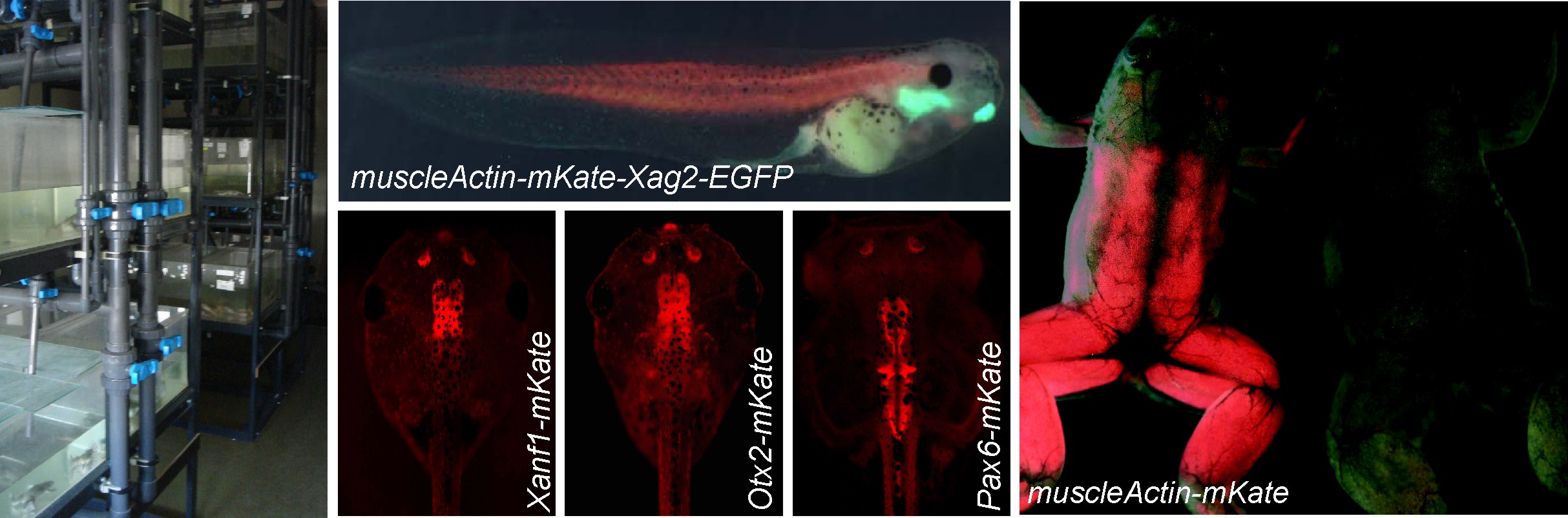
Трансгенные лягушки (Рис. 1 Д, Е) (Ермакова Г. В., Соловьева М. А., Серебрякова М. В.).

Данное направление в основном играет вспомогательную роль, обеспечивая работу по четырем направлениям, указанным выше. Стабильные линии трансгенных лягушек Xenopus, экспрессирующие флюоресцентные белки (ФБ) под контролем тканеспецифичных генных промоторов, являются эффективными моделями для работ по анализу активности генных промоторов, тканеспецифической экспрессии различных генных конструкций и т. п.

А. Локализация мРНК регулятора раннего развития переднего мозга, гомеобоксного гена Anf, выявленная с помощью метода гибридизации in situ в целом эмбрионе шпорцевой лягушки на стадии нейрулы. На этой стадии Anf экспрессируется в той области нервной пластинки (зачаток центральной нервной системы), которая в дальнейшем развитии формирует передний мозг.
Б-Б’. Трансгенный головастик, экспрессирующий ген красного флюоресцентного белка DsRed под контролем промотора Anf, позволяет проследить судьбу клеток, дифференцировка которых регулируется данным геном. Видно, что эти клетки, меченные белком DsRed, образуют передний мозг.
В. Одна из геномных мишеней Anf, ген Noggin2, кодирующий секретируемый ингибитор TGF-β сигнализации, будучи искусственно экспрессирован на брюшной стороне головастика шпорцевой лягушки, индуцирует образование дополнительного переднего мозга и глаза.
Г. Геномные мишени Anf — регуляторы раннего развития головного мозга ГТФазы Ras-dva — образуют отдельное семейство малых ГТФаз.
Д. Трансгенная шпорцевая лягушка, экспрессирующая ген красного флюоресцентного белка Katushka под контролем промотора мышечного актина. Благодаря длинноволновой красной флюоресценции Katushka, содержащие этот белок мышцы отчетливо видны сквозь кожу лягушки. Справа — контрольная лягушка, экспрессирующая белок DsRed, флюоресцирующий в менее длинноволновой области спектра и поэтому плохо видимый сквозь кожу.
Е. Головастик шпорцевой лягушки, экспрессирующий гены красного (DsRed) и зеленого (EGFP) флюоресцентных белков под контролем промотора мышечного актина и гена XAG2, соответственно.

Ф.И.О.ДолжностьЭл. почта
Байрамов Андрей Вячеславович, к. б. н.н.с.
Бородулин Александр Владиславовичасп.
Ермакова Галина Владимировнан.с.
Ерошкин Федор Михайловичм.н.с.
Мартынова Наталья Юрьевна, к. б. н.н.с.
Соловьева Елена Анатольевнаинж.-иссл.
Терёшина Мария Борисовна, к. б. н.н.с.

Избранные публикации

  1. Bayramov A.V., Eroshkin F.M., Martynova N.Y., Ermakova G.V., Solovieva E.A., Zaraisky A.G. (2011). Novel functions of Noggin proteins: inhibition of Activin/Nodal and Wnt signaling. Development 138 (24), 5345–56 [+]

    The secreted protein Noggin1 is an embryonic inducer that can sequester TGFβ cytokines of the BMP family with extremely high affinity. Owing to this function, ectopic Noggin1 can induce formation of the headless secondary body axis in Xenopus embryos. Here, we show that Noggin1 and its homolog Noggin2 can also bind, albeit less effectively, to ActivinB, Nodal/Xnrs and XWnt8, inactivation of which, together with BMP, is essential for the head induction. In support of this, we show that both Noggin proteins, if ectopically produced in sufficient concentrations in Xenopus embryo, can induce a secondary head, including the forebrain. During normal development, however, Noggin1 mRNA is translated in the presumptive forebrain with low efficiency, which provides the sufficient protein concentration for only its BMP-antagonizing function. By contrast, Noggin2, which is produced in cells of the anterior margin of the neural plate at a higher concentration, also protects the developing forebrain from inhibition by ActivinB and XWnt8 signaling. Thus, besides revealing of novel functions of Noggin proteins, our findings demonstrate that specification of the forebrain requires isolation of its cells from BMP, Activin/Nodal and Wnt signaling not only during gastrulation but also at post-gastrulation stages.

  2. Serebrovskaya E.O., Gorodnicheva T.V., Ermakova G.V., Solovieva E.A., Sharonov G.V., Zagaynova E.V., Chudakov D.M., Lukyanov S., Zaraisky A.G., Lukyanov K.A. (2011). Light-induced blockage of cell division with a chromatin-targeted phototoxic fluorescent protein. Biochem. J. 435 (1), 65–71 [+]

    Proteins of the GFP (green fluorescent protein) family are widely used as passive reporters for live cell imaging. In the present study we used H2B (histone H2B)-tKR (tandem KillerRed) as an active tool to affect cell division with light. We demonstrated that H2B-tKR-expressing cells behave normally in the dark, but transiently cease proliferation following green-light illumination. Complete light-induced blockage of cell division for approx. 24 h was observed in cultured mammalian cells that were either transiently or stably transfected with H2B-tKR. Illuminated cells then returned to normal division rate. XRCC1 (X-ray cross complementing factor 1) showed immediate redistribution in the illuminated nuclei of H2B-tKR-expressing cells, indicating massive light-induced damage of genomic DNA. Notably, nondisjunction of chromosomes was observed for cells that were illuminated during metaphase. In transgenic Xenopus embryos expressing H2B-tKR under the control of tissue-specific promoters, we observed clear retardation of the development of these tissues in green-light-illuminated tadpoles. We believe that H2B-tKR represents a novel optogenetic tool, which can be used to study mitosis and meiosis progression per se, as well as to investigate the roles of specific cell populations in development, regeneration and carcinogenesis in vivo.

  3. Tereshina M.B., Bayramov A.V., Zaraisky A.G. (2011). Expression patterns of genes encoding small GTPases Ras-dva-1 and Ras-dva-2 in the Xenopus laevis tadpoles. Gene Expr. Patterns 11 (1-2), 156–61 [+]

    Small GTPases of the recently discovered Ras-dva family are specific to the Vertebrate phylum. In Xenopus laevis, Ras-dva-1 is expressed during gastrulation and neurulation in the anterior ectoderm where it regulates the early development of the forebrain and cranial placodes (Tereshina et al., 2006). In the present work, we studied the expression of Ras-dva-1 at later developmental stages. As a result, the Ras-dva-1 expression was revealed in the eye retina, epiphysis (pineal gland), hypophysis (pituitary), branchial arches, pharynx, oesophagus, stomach and gall bladder of swimming tadpoles. Additionally, we investigated for the first time the expression pattern of Ras-dva-2. This gene encodes a protein belonging to a novel sub-group of Ras-dva GTPases that we identified by phylogenetic analysis within Ras-dva family. In contrast to Ras-dva-1, Ras-dva-2 is not expressed before the swimming tadpole stage. At the swimming tadpole stage, however, Ras-dva-2 transcripts can be detected in the eye retina and brain. Later in development, the expression of Ras-dva-2 can also be revealed in the mesonephros and stomach.

  4. Shcherbo D., Shemiakina I.I., Ryabova A.V., Luker K.E., Schmidt B.T., Souslova E.A., Gorodnicheva T.V., Strukova L., Shidlovskiy K.M., Britanova O.V., Zaraisky A.G., Lukyanov K.A., Loschenov V.B., Luker G.D., Chudakov D.M. (2010). Near-infrared fluorescent proteins. Nat. Methods 7 (10), 827–9 [+]

    Fluorescent proteins with emission wavelengths in the near-infrared and infrared range are in high demand for whole-body imaging techniques. Here we report near-infrared dimeric fluorescent proteins eqFP650 and eqFP670. To our knowledge, eqFP650 is the brightest fluorescent protein with emission maximum above 635 nm, and eqFP670 displays the most red-shifted emission maximum and high photostability.

  5. Martynova N.Y., Eroshkin F.M., Ermolina L.V., Ermakova G.V., Korotaeva A.L., Smurova K.M., Gyoeva F.K., Zaraisky A.G. (2008). The LIM-domain protein Zyxin binds the homeodomain factor Xanf1/Hesx1 and modulates its activity in the anterior neural plate of Xenopus laevis embryo. Dev. Dyn. 237 (3), 736–49 [+]

    The question of how subdivision of embryo into cell territories acquiring different fates is coordinated with morphogenetic movements shaping the embryonic body still remains poorly resolved. In the present report, we demonstrate that a key regulator of anterior neural plate patterning, the homeodomain transcriptional repressor Xanf1/Hesx1, can bind to the LIM-domain protein Zyxin, which is known to regulate cell morphogenetic movements via influence on actin cytoskeleton dynamics. Using a set of deletion mutants, we found that the Engrailed-type repressor domain of Xanf1 and LIM2-domain of Zyxin are primarily responsible for interaction of these proteins. We also demonstrate that Zyxin overexpression in Xenopus embryos elicits effects similar to those observed in embryos with downregulated Xanf1. In contrast, when the repressor-fused variant of Zyxin is expressed, the forebrain enlargements typical for embryos overexpressing Xanf1 develop. These results are consistent with a possible role of Zyxin as a negative modulator of Xanf1 transcriptional repressing activity.

  6. Shcherbo D., Merzlyak E.M., Chepurnykh T.V., Fradkov A.F., Ermakova G.V., Solovieva E.A., Lukyanov K.A., Bogdanova E.A., Zaraisky A.G., Lukyanov S., Chudakov D.M. (2007). Bright far-red fluorescent protein for whole-body imaging. Nat. Methods 4 (9), 741–6 [+]

    Разработан новый флуоресцентный белок Katushka, обладающий флуоресценцией в дальне-красной области спектра, которая является предпочтительной для анализа сигнала внутри тканей животных. Katushka в десять раз ярче, чем созданные ранее дальне-красные флуоресцентные белки и характеризуется высокой скоростью созревания, высокой рН-стабильностью и фотостабильностью. Это делает новый белок идеальным инструментом для прижизненного мечения клеток внутри целых организмов. Создан мономерный вариант белка Katushka, названный mKate, для исследования внутриклеточной локализации белков.

  7. Ermakova G.V., Solovieva E.A., Martynova N.Y., Zaraisky A.G. (2007). The homeodomain factor Xanf represses expression of genes in the presumptive rostral forebrain that specify more caudal brain regions. Dev. Biol. 307 (2), 483–97 [+]

    Early development of the rostral forebrain (RF) in vertebrates is accompanied by the inhibition of two homeobox regulators, Otx2 and Pax6 in the rostral sector of the anterior neural plate, further giving rise to the RF. However, the precise molecular mechanism and meaning of this inhibition is still obscure. We now demonstrate that the activity of the Anf homeodomain protein is necessary and sufficient for the anterior inhibition of Otx2 and Pax6. Specifically, we show that knockdown of the Xenopus laevis Anf, Xanf, by antisense morpholino oligonucleotides results in the anterior expansion of Otx2 and Pax6 expression into the presumptive RF territory. Furthermore, by overexpressing hormone-inducible activator- and repressor-fused variants of Xanf in the absence of protein synthesis, we present evidence that Xanf can directly downregulate Otx2 and Pax6 but not the more rostrally expressed Bf1, Bf2, Fgf8 and Nkx2.4. These results explain how the inhibitory activity of Xanf can discriminate RF regulators in favor of posterior forebrain ones. Assuming that the Anf type of homeobox is specific for vertebrates, our data suggest that the emergence of Anf in evolution could be a critical event for RF development in vertebrates through the elimination of homologues of modern posterior forebrain regulators from the rostral sector of the anterior neural plate.

  8. Tereshina M.B., Zaraisky A.G., Novoselov V.V. (2006). Ras-dva, a member of novel family of small GTPases, is required for the anterior ectoderm patterning in the Xenopus laevis embryo. Development 133 (3), 485–94 [+]

    Ras-like small GTPases are involved in the regulation of many processes essential for the specification of the vertebrate body plan. Recently, we identified the gene of novel small GTPase Ras-dva, which is specifically expressed at the anterior margin of the neural plate of the Xenopus laevis embryo. Now, we demonstrate that Ras-dva and its homologs in other species constitute a novel protein family, distinct from the previously known families of small GTPases. We show that the expression of Ras-dva begins during gastrulation throughout the anterior ectoderm and is activated by the homeodomain transcription factor Otx2; however, later on, Ras-dva expression is inhibited in the anterior neural plate by another homeodomain factor Xanf1. Downregulation of Ras-dva functioning by the dominant-negative mutant or by the antisense morpholino oligonucleotides results in severe malformations of the forebrain and derivatives of the cranial placodes. Importantly, although the observed abnormalities can be rescued by co-injection of the Ras-dva mRNA, they cannot be rescued by the mRNA of the closest Ras-dva homolog from another family of small GTPases, Ras. This fact indicates functional specificity of the Ras-dva signaling pathway. At the molecular level, downregulation of Ras-dva inhibits the expression of several regulators of the anterior neural plate and folds patterning, such as Otx2, BF-1 (also known as Foxg1), Xag2, Pax6, Slug and Sox9, and interferes with FGF8 signaling within the anterior ectoderm. By contrast, expression of the epidermal regulator BMP4 and its target genes, Vent1, Vent2b and Msx1, is upregulated. Together, the data obtained indicate that Ras-dva is an essential component of the signaling network that patterns the early anterior neural plate and the adjacent ectoderm in the Xenopus laevis embryos.

  9. Martynova N., Eroshkin F., Ermakova G., Bayramov A., Gray J., Grainger R., Zaraisky A. (2004). Patterning the forebrain: FoxA4a/Pintallavis and Xvent2 determine the posterior limit of Xanf1 expression in the neural plate. Development 131 (10), 2329–38 [+]

    During early development of the nervous system in vertebrates, expression of the homeobox gene Anf/Hesx1/Rpx is restricted to the anterior neural plate subdomain corresponding to the presumptive forebrain. This expression is essential for normal forebrain development and ectopic expression of Xenopus Anf, Xanf1 (also known as Xanf-1), results in severe forebrain abnormalities. By use of transgenic embryos and a novel bi-colour reporter technique, we have identified a cis-regulatory element responsible for transcriptional repression of Xanf1 that defines its posterior expression limit within the neural plate. Using this element as the target in a yeast one-hybrid system, we identified two transcription factors, FoxA4a/Pintallavis and Xvent2 (also known as Xvent-2), which are normally expressed posterior to Xanf1. Overexpression of normal and dominant-negative versions of these factors, as well as inhibition of their mRNA translation by antisense morpholinos, show that they actually function as transcriptional repressors of Xanf1 just behind its posterior expression limit. The extremely high similarity of the identified Anf cis-regulatory sequences in Xenopus, chick and human, indicates that the mechanism restricting posterior expression of Anf in Xenopus is shared among vertebrates. Our findings support Nieuwkoop's activation-transformation model for neural patterning, according to which the entire neurectoderm is initially specified towards an anterior fate, which is later suppressed posteriorly as part of the trunk formation process.

  10. Chudakov D.M., Belousov V.V., Zaraisky A.G., Novoselov V.V., Staroverov D.B., Zorov D.B., Lukyanov S., Lukyanov K.A. (2003). Kindling fluorescent proteins for precise in vivo photolabeling. Nat. Biotechnol. 21 (2), 191–4 [+]

    Photobleaching of green fluorescent protein (GFP) is a widely used approach for tracking the movement of subcellular structures and intracellular proteins. Although photobleaching is a powerful technique, it does not allow direct tracking of an object's movement and velocity within a living cell. Direct tracking becomes possible only with the introduction of a photoactivated fluorescent marker. A number of previous studies have reported optically induced changes in the emission spectra of fluorescent proteins. However, the ideal photoactivated fluorescent marker should be a nonfluorescent tag capable of "switching on" (i.e., becoming fluorescent) in response to irradiation by light of a particular wavelength, intensity, and duration. In this report, we generated a mutant of Anemonia sulcata chromoprotein asCP. The mutant protein is capable of unique irreversible photoconversion from the nonfluorescent to a stable bright-red fluorescent form ("kindling"). This "kindling fluorescent protein" (KFP1) can be used for precise in vivo photolabeling to track the movements of cells, organelles, and proteins. We used KFP1 for in vivo cell labeling in mRNA microinjection assays to monitor Xenopus laevis embryo development and to track mitochondrial movement in mammalian cells.

  11. Terskikh A., Fradkov A., Ermakova G., Zaraisky A., Tan P., Kajava A.V., Zhao X., Lukyanov S., Matz M., Kim S., Weissman I., Siebert P. (2000). "Fluorescent timer": protein that changes color with time. Science 290 (5496), 1585–8 [+]

    We generated a mutant of the red fluorescent protein drFP583. The mutant (E5) changes its fluorescence from green to red over time. The rate of color conversion is independent of protein concentration and therefore can be used to trace time-dependent expression. We used in vivo labeling with E5 to measure expression from the heat shock-dependent promoter in Caenorhabditis elegans and from the Otx-2 promoter in developing Xenopus embryos. Thus, E5 is a "fluorescent timer" that can be used to monitor both activation and down-regulation of target promoters on the whole-organism scale.

  12. Matz M.V., Fradkov A.F., Labas Y.A., Savitsky A.P., Zaraisky A.G., Markelov M.L., Lukyanov S.A. (1999). Fluorescent proteins from nonbioluminescent Anthozoa species. Nat. Biotechnol. 17 (10), 969–73 [+]

    Открыты новые флуоресцентные белки из коралловых полипов класса Anthozoa с разными цветами флуоресценции от сине-зеленого до красного. Выявление флуоресцентных и окрашенных GFP-подобных белков у неспособных к биолюминесценции коралловых полипов опровергло распространенное мнение, что такие белки функционируют только в составе биолюминисцентных систем и прояснило природу разнообразной флуоресцентной окраски коралловых рифов — явления, которое на протяжении многих лет не находило правильного объяснения.

  13. Ermakova G.V., Alexandrova E.M., Kazanskaya O.V., Vasiliev O.L., Smith M.W., Zaraisky A.G. (1999). The homeobox gene, Xanf-1, can control both neural differentiation and patterning in the presumptive anterior neurectoderm of the Xenopus laevis embryo. Development 126 (20), 4513–23 [+]

    From the onset of neurectoderm differentiation, homeobox genes of the Anf class are expressed within a region corresponding to the presumptive telencephalic and rostral diencephalic primordia. Here we investigate functions of the Xenopus member of Anf, Xanf-1, in the differentiation of the anterior neurectoderm. We demonstrate that ectopic Xanf-1 can expand the neural plate at expense of adjacent non-neural ectoderm. In tadpoles, the expanded regions of the plate developed into abnormal brain outgrowths. At the same time, Xanf-1 can inhibit terminal differentiation of primary neurones. We also show that, during gastrula/neurula stages, the exogenous Xanf-1 can downregulate four transcription regulators, XBF-1, Otx-2, Pax-6 and the endogenous Xanf-1, that are expressed in the anterior neurectoderm. However, during further development, when the exogenous Xanf-1 was presumably degraded, re-activation of XBF-1, Otx-2 and Pax-6 was observed in the abnormal outgrowths developed from blastomeres microinjected with Xanf-1 mRNA. Other effects of the ectopic Xanf-1 include cyclopic phenotype and inhibition of the cement gland, both by Otx-2-dependent and -independent mechanisms. Using fusions of Xanf-1 with the repressor domain of Drosophila engrailed or activator domain of herpes virus VP16 protein, we showed that most of the observed effects of Xanf-1 were probably elicited by its functioning as a transcription repressor. Altogether, our data indicate that the repressor function of Xanf-1 may be necessary for regulation of both neural differentiation and patterning in the presumptive anterior neurectoderm.

  14. Kazanskaya O.V., Severtzova E.A., Barth K.A., Ermakova G.V., Lukyanov S.A., Benyumov A.O., Pannese M., Boncinelli E., Wilson S.W., Zaraisky A.G. (1997). Anf: a novel class of vertebrate homeobox genes expressed at the anterior end of the main embryonic axis. Gene 200 (1-2), 25–34 [+]

    Five novel genes homologous to the homeobox-containing genes Xanf-1 and Xanf-2 of Xenopus and Hesx-1/Rpx of mouse have been identified as a result of a PCR survey of cDNA in sturgeon, zebrafish, newt, chicken and human. Comparative analysis of the homeodomain primary structure of these genes revealed that they belong to a novel class of homeobox genes, which we name Anf. All genes of this class investigated so far have similar patterns of expression during early embryogenesis, characterized by maximal transcript levels being present at the anterior extremity of the main embryonic body axis. The data obtained also suggest that, despite considerable high structural divergence between their homeodomains, all known Anf genes may be orthologues, and thus represent one of the most quickly evolving classes of vertebrate homeobox genes.

  15. Zaraisky A.G., Ecochard V., Kazanskaya O.V., Lukyanov S.A., Fesenko I.V., Duprat A.M. (1995). The homeobox-containing gene XANF-1 may control development of the Spemann organizer. Development 121 (11), 3839–47 [+]

    At the beginning of gastrulation the homeobox-containing gene, XANF-1, is expressed at a low level throughout the animal hemisphere of Xenopus laevis embryos, with a local maximum of expression in the region of the dorsal blastopore lip. By the end of gastrulation expression ceases everywhere except in the most anterior part of the neurectoderm. We have investigated the functions of this gene by microinjecting XANF-1 mRNA in the blastomeres of the 32-cell stage embryo and have observed the following effects. First, microinjections of the mRNA in the animal blastomeres and the blastomeres of the marginal zone elicited massive migration of cells to the interior of the embryo at the early gastrula stage. Second, overexpression of XANF-1 in the ventral marginal zone (VMZ) resulted in the appearance of an additional centre of gastrulation movements and the formation of a secondary axis. In addition we showed that synthetic XANF-1 mRNA was able to cause dorsal-type differentiation in VMZ explants extirpated from the microinjected embryos at the beginning of gastrulation. These results suggest that XANF-1 may control the main functions of cells of the Spemann organizer.

  16. Zaraisky A.G., Lukyanov S.A., Vasiliev O.L., Smirnov Y.V., Belyavsky A.V., Kazanskaya O.V. (1992). A novel homeobox gene expressed in the anterior neural plate of the Xenopus embryo. Dev. Biol. 152 (2), 373–82 [+]

    To obtain gene sequences controlling the early steps of amphibian neurogenesis, we have performed differential screening of a subtractive cDNA library prepared by a novel PCR-based method from a single presumptive neural plate of a Xenopus laevis late-gastrula embryo. As a result we have isolated a fragment of a novel homeobox gene (named XANF-1, for Xenopus anterior neural folds). This gene is expressed predominantly in the anterior part of the developing nervous system. Such preferential localization of XANF-1 mRNA is established from its initially homogenous distribution in ectoderm of early gastrula. This change in the expression pattern is conditioned by a differential influence of various mesoderm regions on ectoderm: anterior mesoderm activates XANF-1 expression in the overlying ectoderm, whereas posterior axial and ventral mesoderm areas inhibit it. The data obtained demonstrate for the first time that selection of genes for specific expression in the CNS of the early vertebrate embryo is affected not only by chordamesoderm (a neural inductor) but also by ventral mesoderm.

Руководитель подразделения

Зарайский Андрей Георгиевич

  • Москва, ул. Миклухо-Маклая, 16/10 — На карте
  • ИБХ РАН, корп. 51, комн. 261
  • Тел.: +7 (495) 336-36-22
  • Эл. почта: azaraisky@yahoo.com